Reflections
Psychedelics and Neuroplasticity: What Does the Research Actually Show?
Can psychedelics change the brain? Explore research on neuronal growth, synaptic plasticity, and social learning—and why findings in cells and mice do not yet establish lasting rewiring in humans.
By Nick Moffo · Published October 28, 2026 · 13 min read
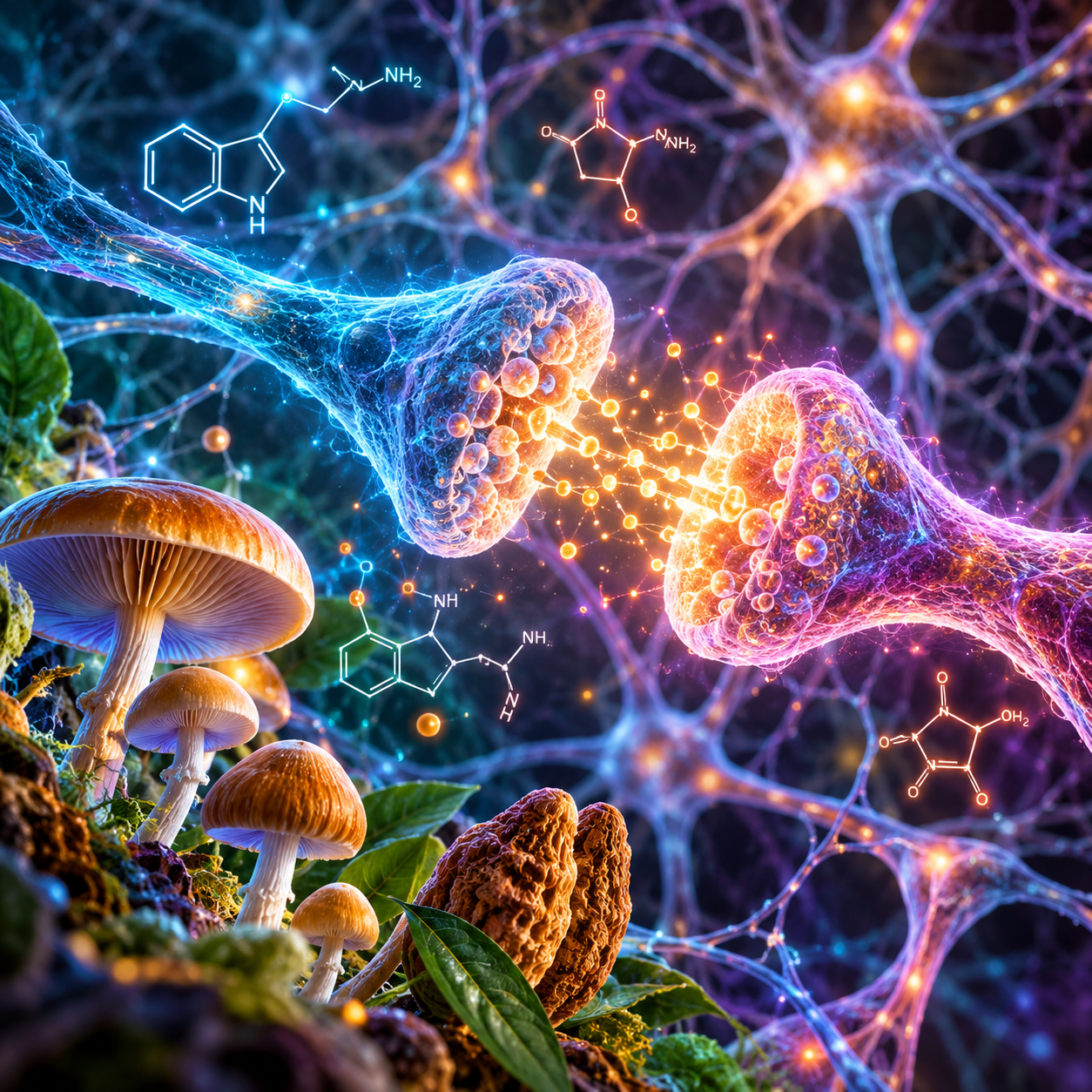
The human brain is not a fixed structure. Throughout life, it continuously adapts to experience, strengthens certain connections, weakens others, and reorganizes the networks through which we perceive and interact with the world.
This capacity for change is known as neuroplasticity.
For decades, scientists have investigated how learning, environmental experiences, stress, and mental health conditions influence the brain's ability to adapt. More recently, an intriguing question has emerged: Could psychedelic compounds temporarily enhance the brain's capacity for change?
Research involving psilocybin, LSD, DMT, ketamine, and MDMA suggests that certain psychoactive substances can influence biological processes associated with neural plasticity. Some laboratory studies have observed the growth of neuronal branches, the formation of new synaptic connections, and changes in learning-related processes.
But the science is more complicated than the popular idea that psychedelics simply "rewire the brain."
Much of the strongest evidence comes from cells and laboratory animals. Human studies offer additional insights, but researchers are still determining how these findings translate into meaningful, lasting changes in cognition, behavior, and mental health.
Understanding that distinction is essential.
What Is Neuroplasticity?
Neuroplasticity refers to the nervous system's ability to modify its structure, function, and connections in response to experience or biological activity.
Rather than remaining permanently wired, the brain continually adjusts how neurons communicate.
These changes occur through several mechanisms:
- Synaptic plasticity: Changes in the strength or efficiency of communication between neurons.
- Structural plasticity: Physical changes to neuronal branches, dendritic spines, and synaptic connections.
- Functional reorganization: Changes in how neural circuits participate in particular tasks or processes.
Neuroplasticity underlies learning, memory, skill development, and adaptation to changing environments.
However, plasticity is not automatically beneficial.
The same biological flexibility that supports learning can also contribute to persistent fear responses, maladaptive habits, or other patterns that become reinforced through experience.
The significance of neuroplasticity therefore depends not only on whether the brain changes, but also on what changes, under which conditions, and with what consequences.
How Might Psychedelics Influence Neuroplasticity?
Many classic psychedelics, including psilocybin, LSD, and DMT, produce important effects through serotonin receptors, particularly the 5-HT2A receptor.
Activating these receptors can alter neuronal signaling and influence pathways associated with synaptic adaptation.
Researchers are particularly interested in several biological mechanisms.
BDNF and TrkB Signaling
Brain-derived neurotrophic factor, or BDNF, is a protein involved in neuronal survival, synaptic development, and plasticity.
BDNF interacts with a receptor called TrkB, helping regulate processes associated with learning and neural adaptation.
Some psychedelic research suggests that BDNF-related signaling may contribute to changes in neuronal structure and function.
However, not every compound acts through the same mechanism, and the exact relationship between psychedelic receptor activity and BDNF signaling remains under investigation.
mTOR and Synaptic Growth
Another important pathway involves mTOR, a signaling system that helps regulate protein synthesis and cellular growth.
Synaptic remodeling requires the production and organization of proteins that support neuronal connections.
Experimental research has implicated mTOR-related signaling in some of the structural changes observed after exposure to psychedelics and ketamine.
These mechanisms provide plausible biological explanations for plasticity-related effects, but they do not establish that every psychedelic produces equivalent changes in the human brain.
Psilocybin: Evidence of Lasting Structural Changes in Mice
Psilocybin, the psychoactive compound found in certain mushroom species, has become one of the most extensively investigated classic psychedelics in modern neuroscience.
A particularly influential study was published in Neuron in 2021.
Researchers at Yale University used two-photon microscopy to observe dendritic spines in the frontal cortex of living mice.
Dendritic spines are small protrusions on neurons that commonly receive excitatory synaptic input. Changes in their number and structure can provide evidence of synaptic remodeling.
Following psilocybin administration, researchers observed approximately 10% increases in dendritic spine size and density.
These changes appeared rapidly, within approximately 24 hours, and some persisted for at least one month.
The findings were significant because they demonstrated measurable structural changes in living mammalian brains rather than exclusively in isolated cells.
The researchers also reported changes in excitatory neurotransmission and stress-related behavior.
Nevertheless, the study involved mice, not humans.
It does not demonstrate that psilocybin produces the same magnitude of dendritic growth in people or that these structural changes directly explain clinical improvements.
What the evidence supports: Psilocybin can promote rapid, persistent structural plasticity in particular regions of the mouse brain.
What remains uncertain: How closely these effects translate to humans and whether they are necessary for lasting therapeutic outcomes.
Primary research: Shao et al. (2021), Neuron.
LSD and DMT: Laboratory Evidence of Neuronal Growth
In 2018, researchers published an influential study in Cell Reports examining the effects of several psychedelic compounds on neuronal structure and function.
The research included compounds such as LSD and DMT.
Using cultured neurons and animal experiments, the investigators observed changes associated with neurite growth, dendritic complexity, and synaptic development.
Neurites are projections extending from neurons, including developing axons and dendrites. Their growth can contribute to the formation and organization of neural circuits.
The researchers also identified signaling pathways involving TrkB, mTOR, and serotonin receptors as potential contributors to these effects.
These findings helped establish the idea that certain psychedelics may possess psychoplastogenic properties—the capacity to promote aspects of neural plasticity.
LSD
LSD is a potent serotonergic psychedelic that interacts with multiple receptor systems.
Laboratory findings suggest that it can influence neuronal growth and plasticity-related signaling.
Its effects on neural adaptation are scientifically interesting because they may extend beyond the immediate changes in perception associated with the psychedelic experience.
However, direct evidence demonstrating lasting structural synaptic growth in living human brains following LSD remains limited.
DMT
DMT has also demonstrated plasticity-related effects in experimental systems.
The 2018 research found evidence that DMT can influence neuronal structure under laboratory conditions.
This has generated interest in whether the compound might affect mechanisms involved in learning, adaptation, and recovery.
Yet findings from cultured neurons cannot establish equivalent effects in the human brain.
Differences in metabolism, exposure, brain environment, and experimental design all matter.
The important distinction: LSD and DMT have meaningful preclinical evidence of plasticity-related activity, but their long-term structural effects in humans are not established.
Primary research: Ly et al. (2018), Cell Reports.
Ketamine: A Different Pathway to Synaptic Plasticity
Ketamine occupies a distinctive position in this research.
Unlike classic serotonergic psychedelics, ketamine is primarily associated with antagonism of NMDA-type glutamate receptors.
It is generally classified as a dissociative anesthetic rather than a classic psychedelic.
Nevertheless, ketamine has become central to the study of rapid-acting antidepressant mechanisms and synaptic plasticity.
Preclinical research has linked ketamine exposure to changes in glutamate signaling, mTOR-related pathways, and synaptic development in the prefrontal cortex.
Some animal studies have observed rapid increases in synaptic proteins and spine formation following ketamine administration.
These findings contributed to the hypothesis that restoring aspects of synaptic connectivity might play a role in ketamine's antidepressant effects.
Human clinical research has established that ketamine can produce rapid antidepressant effects in some patients, although those effects vary and require careful medical oversight.
Primary research: Zarate et al. (2006), Archives of General Psychiatry.
What remains less certain is how directly the structural mechanisms identified in rodents explain clinical outcomes in humans.
Ketamine demonstrates an important principle: different pharmacological pathways may converge on some overlapping processes involved in neural adaptation.
It also illustrates why the broader category of plasticity-promoting psychoactive compounds cannot be explained through serotonin signaling alone.
MDMA: Reopening a Window for Social Learning?
MDMA is pharmacologically different from both classic psychedelics and ketamine.
Its effects involve substantial changes in monoamine signaling, including serotonin, norepinephrine, and dopamine.
One particularly interesting line of research concerns critical periods.
Critical periods are developmental windows during which certain neural circuits are especially sensitive to experience and learning.
In 2019, researchers reported that MDMA could reopen a critical period for social reward learning in adult mice.
This suggested that some forms of experience-dependent plasticity, normally more pronounced earlier in development, might be temporarily reinstated under particular biological conditions.
A later study published in Nature in 2023 expanded this line of investigation to several psychoactive compounds.
Researchers reported that MDMA, psilocybin, LSD, ketamine, and ibogaine could reopen a critical period for social reward learning in mice.
The findings raised an intriguing possibility: certain drugs may temporarily change how responsive specific neural circuits are to social experience.
But this does not mean that these compounds universally reopen every developmental critical period.
Nor does it establish that adults become broadly more capable of learning any skill after psychedelic exposure.
The findings concern a particular experimental model of social reward learning in mice.
What the evidence supports: MDMA and several other compounds can influence critical-period-like plasticity in specific animal experiments.
What remains uncertain: Whether comparable mechanisms operate in humans and how they relate to therapeutic outcomes.
Primary research: Nardou et al. (2019; 2023).
Ibogaine: An Emerging Area of Research
Ibogaine is a psychoactive alkaloid associated with the West African shrub Tabernanthe iboga.
Its pharmacology is unusually complex and differs substantially from that of classic serotonergic psychedelics.
Ibogaine has attracted scientific interest for its effects on multiple neurotransmitter systems and its potential relevance to substance-use disorders.
The 2023 critical-period study included ibogaine among the compounds associated with renewed social reward learning plasticity in mice.
This finding suggests that plasticity-related effects may occur across pharmacologically diverse substances.
However, the evidence is still preliminary, and ibogaine's precise mechanisms require further investigation.
Importantly, ibogaine carries significant medical risks, including potentially dangerous cardiac rhythm disturbances.
Review: Koenig and Hilber (2015), Molecules.
Its inclusion in neuroplasticity research should not be interpreted as evidence of safety or established clinical benefit.
What About the Human Brain?
One of the biggest challenges in psychedelic neuroscience is determining how laboratory findings translate into human experience.
Researchers can directly image dendritic spines in experimental animals using techniques that are not routinely available for studying living human brains.
Human studies therefore often rely on different measurements.
Functional magnetic resonance imaging, or fMRI, can identify changes in patterns of brain activity and connectivity.
Other approaches examine clinical outcomes, cognitive performance, emotional processing, and learning.
These measurements can reveal important effects, but they do not necessarily demonstrate the formation of new synapses.
For example, a change in functional connectivity following psilocybin does not automatically mean that neurons have physically grown new connections.
Functional connectivity describes statistical relationships between activity patterns across brain regions. It is not a direct count of synapses.
Similarly, improvements in depression symptoms or psychological flexibility cannot, by themselves, prove that structural neuroplasticity caused those improvements.
Human psychedelic research has produced promising findings, but the connection between molecular changes, neural networks, subjective experience, and lasting behavioral outcomes remains an active scientific question.
Does More Neuroplasticity Mean Better Mental Health?
The idea of increased neuroplasticity can sound universally positive.
A more adaptable brain might seem like a healthier brain.
But neuroscience does not support such a simple conclusion.
Plasticity is a biological capacity, not a guarantee of improvement.
Learning a language involves plasticity. So can the development of persistent fear associations.
The consequences depend on which circuits change, the surrounding environment, and the experiences occurring during periods of heightened sensitivity.
This distinction may be particularly relevant to psychedelic-assisted therapy.
One hypothesis is that certain compounds temporarily increase the brain's responsiveness to psychological experiences, potentially creating opportunities for new learning.
If this hypothesis proves correct, the therapeutic context, professional support, and subsequent integration of experiences could be important.
However, researchers have not established that a generalized neuroplasticity window is the primary mechanism of psychedelic-assisted treatment.
Nor is there evidence that psychedelic exposure reliably produces beneficial neural rewiring outside carefully studied contexts.
The relationship between biological plasticity and psychological change remains complex.
What Scientists Still Need to Understand
Despite significant progress, several important questions remain unanswered.
How long do these changes last in humans?
Some animal studies show structural changes persisting for weeks, but comparable human measurements remain difficult.
Do different compounds produce similar effects?
Psilocybin, LSD, DMT, ketamine, MDMA, and ibogaine have different pharmacological profiles. Their plasticity-related effects should not be treated as interchangeable.
Are structural changes responsible for therapeutic benefits?
Researchers are still investigating whether synaptic remodeling is necessary, sufficient, or simply associated with improvements observed in clinical studies.
Can plasticity be enhanced without profound subjective effects?
This question has encouraged interest in compounds designed to influence neural plasticity while minimizing hallucinogenic effects.
Could heightened plasticity sometimes be harmful?
If certain experiences become more influential during periods of increased neural sensitivity, researchers must also consider the possibility of reinforcing unwanted responses.
Answering these questions will require more rigorous human research, improved biological measurements, and careful comparisons across compounds.
Conclusion: A Promising Science, Not a Proven Shortcut
Psychedelic neuroplasticity research has opened an important new chapter in neuroscience.
Studies involving psilocybin, LSD, DMT, ketamine, MDMA, and ibogaine suggest that certain psychoactive compounds can influence processes associated with neuronal growth, synaptic remodeling, and experience-dependent learning.
Some of the most compelling findings involve measurable structural changes in laboratory animals and the reopening of specific learning-related critical periods.
Yet the distance between these discoveries and claims about permanently rewiring the human brain remains substantial.
The evidence does not support treating all psychedelics as interchangeable, assuming that greater plasticity is always beneficial, or equating changes in brain connectivity with the growth of new neurons.
Perhaps the most meaningful implication is not that psychedelics can automatically transform the brain.
It is that the adult brain may retain forms of adaptability that scientists are only beginning to understand—and that certain compounds may help reveal how those mechanisms work.
For now, the science invites curiosity, careful investigation, and an appreciation for the extraordinary complexity of the brain's capacity to change.
Scientific References
- Ly, C., et al. (2018). Psychedelics promote structural and functional neural plasticity. Cell Reports, 23(11), 3170–3182. https://doi.org/10.1016/j.celrep.2018.05.022
- Shao, L.-X., et al. (2021). Psilocybin induces rapid and persistent growth of dendritic spines in frontal cortex in vivo. Neuron, 109(16), 2535–2544.e4. https://doi.org/10.1016/j.neuron.2021.06.008
- Nardou, R., et al. (2023). Psychedelics reopen the social reward learning critical period. Nature, 618, 790–798. https://doi.org/10.1038/s41586-023-06204-3
- Nardou, R., et al. (2019). Oxytocin-dependent reopening of a social reward learning critical period with MDMA. Nature, 569, 116–120. https://doi.org/10.1038/s41586-019-1075-9
- Li, N., et al. (2010). mTOR-dependent synapse formation underlies the rapid antidepressant effects of NMDA antagonists. Science, 329(5994), 959–964. https://doi.org/10.1126/science.1190287
- Zarate, C. A., Jr., et al. (2006). A randomized trial of an N-methyl-D-aspartate antagonist in treatment-resistant major depression. Archives of General Psychiatry, 63(8), 856–864. https://doi.org/10.1001/archpsyc.63.8.856
- Koenig, X., & Hilber, K. (2015). The anti-addiction drug ibogaine and the heart: A delicate relation. Molecules, 20(2), 2208–2228. https://doi.org/10.3390/molecules20022208
Editorial note: This article is intended for scientific education and does not recommend the use of psychedelic or dissociative substances. Findings from cell cultures and animal models should not be interpreted as established human therapeutic effects.