Reflections
What Is Consciousness? Understanding the Nature of Awareness
Consciousness is the foundation of human experience, yet its nature remains unresolved. Explore subjective awareness, the brain, competing scientific theories, and the enduring questions connecting neuroscience and philosophy.
By Nick Moffo · Published October 21, 2026 · 13 min read
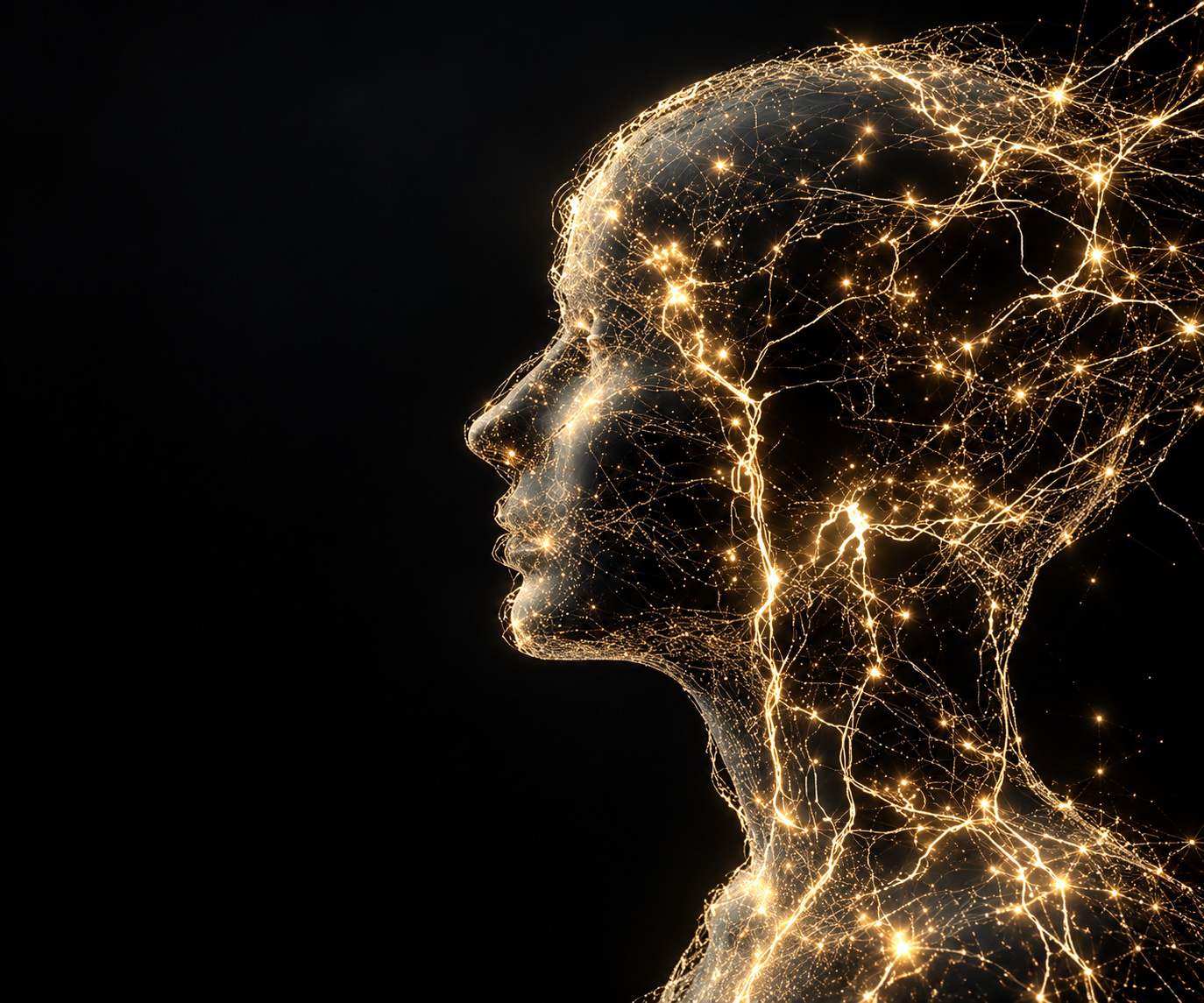
What Is Consciousness? Consciousness is one of the most familiar aspects of human existence and one of the least understood.
You experience the world. You see color, hear sound, feel emotion, remember the past, imagine the future, experience pain and pleasure, and recognize yourself as a person moving through time. Yet beneath all of these experiences lies a question that remains remarkably difficult to answer:
Why is there an experience at all?
A brain can be measured. Neurons can be recorded. Electrical activity can be mapped. Chemical signals can be analyzed. Researchers can observe which networks become active when a person sees an object, recalls a memory, makes a decision, or reports a conscious experience.
But none of those measurements directly contain the experience itself.
There is a difference between measuring the neural activity associated with seeing red and actually experiencing the redness of red.
That distinction sits at the center of the modern study of consciousness.
Today, consciousness is investigated across neuroscience, psychology, cognitive science, philosophy, medicine, and increasingly through computational models. Researchers have made substantial progress in identifying the brain processes associated with conscious perception, attention, memory, and awareness. Yet there is still no universally accepted theory explaining exactly how subjective experience arises from physical processes in the brain.
Understanding consciousness therefore requires holding two ideas at once:
We know considerably more about consciousness than we once did.
And:
We still do not know what consciousness ultimately is.
That tension is where the subject becomes interesting.
Consciousness Is More Than Being Awake
In everyday language, consciousness is often treated as the opposite of unconsciousness.
Someone who is awake is conscious. Someone who is unconscious is not.
But scientifically, the distinction is more complicated.
Consciousness can refer to several related but different phenomena: being awake, being aware of one's surroundings, having subjective experiences, having particular thoughts or perceptions enter awareness, and possessing an ongoing sense of self.
These dimensions can change independently.
A person may be awake but barely aware of their surroundings. Someone may be deeply absorbed in a thought and temporarily ignore information around them. During dreaming, the brain can generate an elaborate world of experiences despite the absence of ordinary waking perception.
This is one reason researchers are careful with the word consciousness. It is not necessarily one single process that switches neatly between “on” and “off.”
Instead, consciousness appears to involve multiple dimensions of experience and information processing.
One useful distinction is between consciousness itself and the contents of consciousness.
Your consciousness is the fact that experience is occurring.
The contents are what that experience contains:
- A sound
- A color
- A memory
- A thought
- A physical sensation
- An emotion
- An image
- A perception of another person
- A sense of yourself
This distinction becomes particularly important when studying altered states of consciousness. A psychedelic experience, for example, may dramatically change the contents, organization, intensity, or interpretation of conscious experience without necessarily eliminating consciousness itself. Researchers studying psychedelics have emphasized the importance of making these distinctions rather than treating “consciousness” as a single variable.
The First-Person Experience
There is something unusual about consciousness that makes it different from almost every other object of scientific investigation.
You can study almost anything from the outside.
You can observe a tree. You can measure a chemical reaction. You can record the movement of a planet. You can examine a neuron under a microscope.
But consciousness is also the thing through which you experience the observation.
You don't simply observe your own consciousness from the outside. You experience it from within.
Philosophers sometimes describe this as the first-person perspective.
There is something it is like to see the ocean.
Something it is like to hear music.
Something it is like to experience grief.
Something it is like to remember someone you love.
Something it is like to be you.
This subjective dimension is often called phenomenal consciousness.
The philosopher Thomas Nagel famously framed the issue around the question of what it is like to be another organism. The point is not merely that organisms process information differently. It is that conscious experience appears to possess a subjective character that cannot be fully captured by describing behavior alone.
That subjective quality is one reason consciousness remains such a difficult scientific and philosophical problem.
The Hard Problem of Consciousness
In the 1990s, philosopher David Chalmers gave particular prominence to what became known as the hard problem of consciousness.
The distinction is relatively simple.
Science can ask questions such as:
- How does the brain process visual information?
- How does attention work?
- How are memories formed?
- How does the brain distinguish one stimulus from another?
- How does information influence behavior?
- Which neural processes accompany conscious perception?
These are sometimes grouped under the label of the “easy problems” of consciousness.
“Easy” does not mean scientifically easy.
Understanding these processes can be extraordinarily difficult.
The term simply means that they appear, in principle, to be approachable through ordinary scientific explanation.
The hard problem asks something different:
Why do these physical processes produce subjective experience at all?
Why isn't the brain simply processing information in the dark?
Why does neural activity associated with color correspond to an experience of color?
Why does pain feel like something rather than simply producing avoidance behavior?
Why does information processing come with an inner point of view?
This is often described as the explanatory gap between objective brain processes and subjective experience. The problem remains actively debated rather than scientifically settled.
Importantly, not every researcher agrees that the hard problem is a fundamentally unsolvable problem.
Some philosophers and neuroscientists argue that the apparent gap may result partly from how humans conceptualize consciousness. Others argue that sufficiently complete explanations of brain function could eventually dissolve the apparent mystery.
In other words, even the disagreement about what the problem actually is is part of consciousness research.
Is Consciousness Produced by the Brain?
Modern neuroscience provides overwhelming evidence that conscious experience is deeply dependent on the brain.
Damage to particular brain systems can alter perception, memory, personality, language, attention, awareness, and the sense of self.
Anesthesia can dramatically reduce or eliminate conscious experience.
Sleep changes the organization and contents of consciousness.
Neurological disorders can selectively disrupt aspects of awareness.
Brain stimulation can alter perception and experience.
These relationships strongly connect consciousness with brain activity.
But correlation is not automatically explanation.
Finding neural activity that reliably accompanies an experience does not, by itself, answer why that activity is accompanied by subjective experience.
This is why scientists search for what are called neural correlates of consciousness: measurable brain processes that systematically correspond to conscious states or contents.
The goal is not merely to find a brain region labeled “consciousness.”
Instead, researchers are attempting to understand the dynamic processes, interactions, and information structures associated with conscious experience.
Contemporary theories disagree considerably about which processes are fundamental.
Theories of Consciousness
There is currently no universally accepted theory of consciousness.
Instead, several major frameworks attempt to explain different aspects of the phenomenon.
Global Neuronal Workspace Theory
Global Workspace approaches propose, broadly speaking, that information becomes conscious when it becomes globally available to multiple systems in the brain.
The analogy is a mental workspace.
Information is processed throughout the brain, but some information becomes sufficiently available to a wider network that it can influence reasoning, memory, decision-making, language, and behavior.
Under this framework, consciousness is associated with a kind of widespread availability or broadcasting of information.
Integrated Information Theory
Integrated Information Theory, or IIT, approaches consciousness from a different direction.
Rather than primarily asking what information is globally available, IIT emphasizes the degree to which information is integrated within a system.
The theory proposes that consciousness corresponds to particular properties of integrated causal information.
This leads to substantially different predictions about where and how conscious experience is represented in the brain.
Predictive Processing
Another influential family of approaches emphasizes the brain's role as a prediction-generating system.
Rather than passively receiving a complete picture of reality, the brain continuously generates predictions about incoming sensory information and updates those predictions based on differences between expectation and sensory input.
From this perspective, perception is not simply a recording of the external world.
It is an active process of inference.
This becomes especially interesting when considering consciousness because our experienced reality may depend not only on incoming sensory signals but also on how the brain interprets and organizes those signals.
Recurrent Processing and Higher-Order Theories
Other theories emphasize recurrent interactions between brain regions or propose that mental representations become conscious when they are represented at a higher level.
These theories differ substantially in their proposed mechanisms, but they share an important goal:
to move from simply observing that consciousness correlates with brain activity toward explaining the mechanisms that make conscious experience possible.
A major review in Nature Reviews Neuroscience identifies several prominent theoretical approaches, including higher-order theories, global workspace theories, recurrent/predictive processing theories, and integrated information theory.
The Consciousness Debate Is Not Settled
One of the most important developments in consciousness research is that competing theories are increasingly being tested against one another.
In 2025, a large international collaboration directly compared predictions from Global Neuronal Workspace Theory and Integrated Information Theory using preregistered experiments across multiple neuroimaging methods, including fMRI, MEG, and intracranial EEG.
The study was designed specifically to test competing predictions rather than allowing each theory to be evaluated only on its own terms.
That matters.
Science progresses when theories make predictions that can potentially prove them wrong.
The results did not simply produce a final answer to consciousness.
Instead, they demonstrated how difficult and valuable direct empirical comparison can be.
The field remains active precisely because the evidence has not reduced the subject to one universally accepted explanation.
The Brain Does Not Simply Record Reality
One of the most important ideas for understanding consciousness is that perception is not necessarily a perfect representation of the external world.
Your brain receives sensory information, but it also interprets it.
The experience you call “reality” is therefore shaped by an interaction between incoming information and the brain's internal models, expectations, memories, attention, and predictions.
Consider an optical illusion.
The physical stimulus may remain unchanged while your experience of it changes.
The same principle appears throughout perception.
Your brain is continuously organizing information into a coherent model of the world and your place within it.
This does not mean that reality is imaginary.
It means that your conscious experience of reality is mediated by biological processes.
That distinction is profound.
You never experience the world completely unprocessed.
You experience the world through a nervous system.
And you experience that nervous system through consciousness.
The Self: Who Is Experiencing?
Consciousness raises another difficult question:
Who is conscious?
Most of us experience ourselves as a continuous individual.
There is a sense that there is a “me” behind our thoughts and experiences.
But neuroscience suggests that the sense of self is not as simple as it feels.
Your sense of identity is influenced by memory, bodily sensations, emotions, social relationships, attention, expectations, and ongoing representations of your own body and mind.
The self may therefore be better understood as an evolving model constructed by the brain rather than as a single object hidden somewhere inside it.
This does not make the self meaningless.
Quite the opposite.
The experience of being a self is one of the most consequential aspects of human consciousness.
It shapes how we understand our past, anticipate our future, relate to other people, and assign meaning to our lives.
Understanding how the brain constructs this experience is therefore one of the central questions connecting neuroscience, psychology, philosophy, and consciousness research.
Consciousness and Altered States
Consciousness becomes especially interesting when its normal organization changes.
Dreaming, meditation, sensory deprivation, anesthesia, neurological disorders, and psychedelic states can all alter aspects of conscious experience.
These states give researchers an unusual opportunity.
Instead of studying consciousness only in its ordinary waking form, scientists can examine what happens when specific characteristics of experience change.
Psychedelic research is particularly relevant here.
Psychedelic substances can produce profound changes in perception, emotion, cognition, self-experience, and the organization of conscious contents. Researchers therefore use them as tools for investigating particular dimensions of consciousness.
But there is an important distinction.
Psychedelics may help researchers understand how particular aspects of consciousness change without necessarily explaining why consciousness exists in the first place.
A major review of psychedelics and consciousness argues for precisely this kind of caution: psychedelic research may provide valuable information about relationships between brain
function, subjective experience, and behavior, while there is currently little reason to claim that psychedelics have solved the philosophical hard problem.
That distinction is important for serious research.
An altered state can reveal something about the architecture of consciousness without automatically revealing its ultimate nature.
So, What Is Consciousness?
There is no single answer that has been universally accepted.
The most scientifically responsible answer is therefore not a definitive declaration, but a recognition of what we currently understand.
Consciousness is the presence of subjective experience.
It encompasses awareness, perception, thought, feeling, sensation, and the changing contents of our inner world.
It appears deeply dependent on biological processes within the brain.
Neuroscience can increasingly identify mechanisms associated with conscious perception and can experimentally manipulate many processes related to awareness.
Yet the fundamental question of why physical processes are accompanied by subjective experience remains unresolved.
Several competing theories attempt to explain it.
Some emphasize global access to information.
Others emphasize integration.
Others focus on prediction, recurrent processing, higher-order representation, or other computational and neural mechanisms.
None has yet closed the debate.
And perhaps that uncertainty is not a weakness.
It is the reason consciousness remains one of the most compelling questions at the intersection of science and philosophy.
Why Consciousness Matters
The question of consciousness is not merely academic.
Everything you have ever experienced has occurred from the perspective of consciousness.
Your relationships.
Your memories.
Your ambitions.
Your fears.
Your sense of identity.
Your experience of beauty.
Your perception of time.
Your ability to wonder about your own existence.
All of them depend, in some way, on the fact that there is something it is like to be you.
Understanding consciousness therefore means confronting a question at the center of human existence:
What does it mean to experience anything at all?
Science has begun to map the biological processes associated with conscious experience.
Philosophy continues to challenge the assumptions behind those explanations.
Psychology explores how perception, memory, attention, and selfhood shape the mind we experience.
And emerging research into altered states provides new ways to investigate how consciousness can change.
The answers are incomplete.
But the investigation is advancing.
Perhaps the most honest place to begin is not with the claim that we know what consciousness is, but with the recognition that we are conscious beings trying to understand the very process through which we understand.
That is the paradox at the heart of the subject.
And it is where the exploration begins.