Reflections
Neuroplasticity: How the Brain Changes, Adapts, and Rewires Itself
The brain is not a fixed structure. Throughout life, neural connections strengthen, weaken, and reorganize in response to experience. Explore the science of neuroplasticity, from learning and memory to recovery, adaptation, and the limits of change.
By Nick Moffo · Published October 22, 2026 · 18 min read
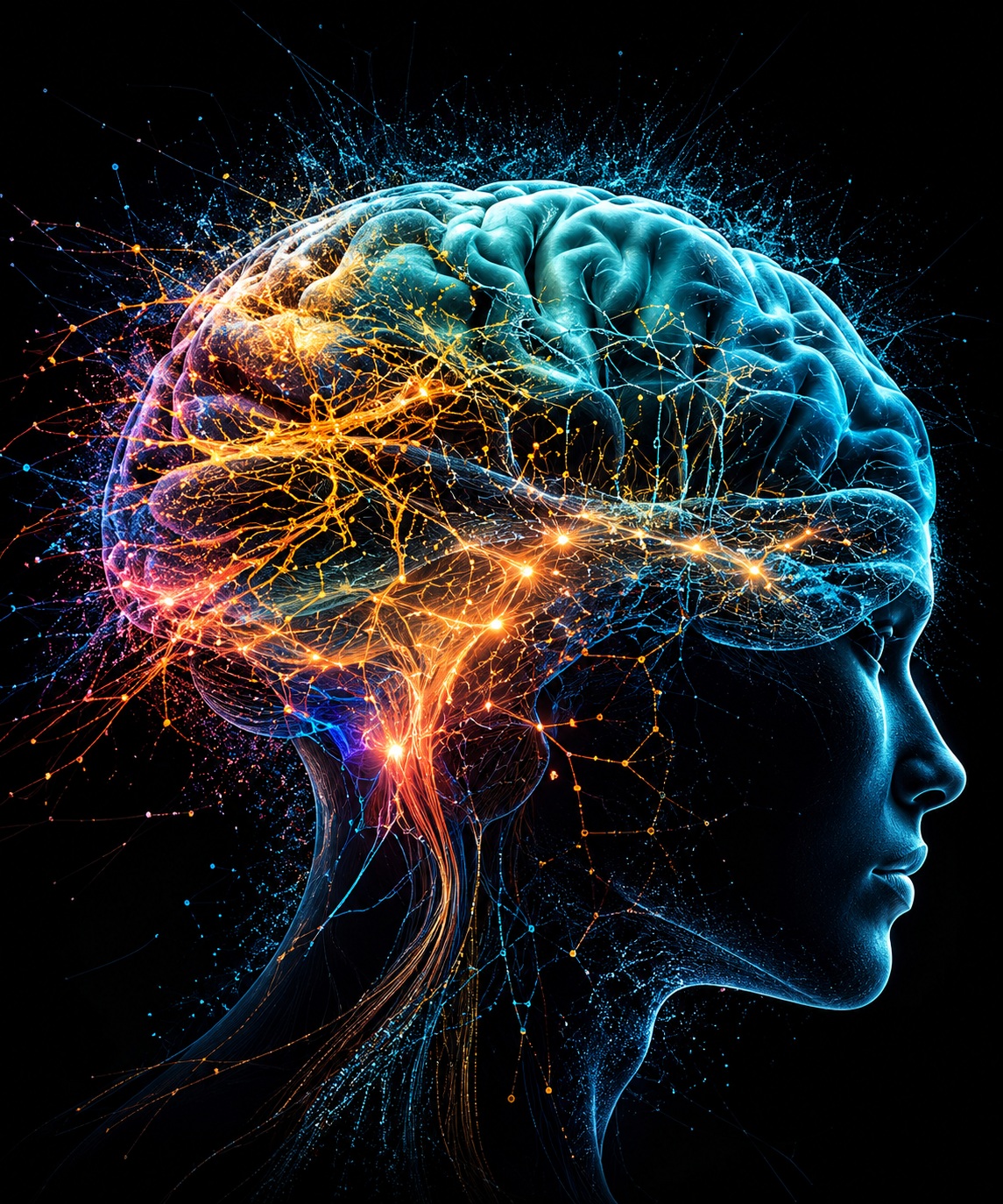
For much of modern scientific history, the adult brain was viewed as a relatively fixed biological structure. Development was thought to establish its essential architecture, while adulthood represented a period of stability followed by gradual decline.
Neuroscience has fundamentally changed that understanding.
The brain is not static. Its connections are continually influenced by experience, learning, behavior, injury, and the demands of the surrounding environment. Some connections become stronger, others weaken, and certain neural circuits reorganize as the brain adapts to changing conditions.
This capacity for change is known as neuroplasticity.
Neuroplasticity helps explain how people acquire skills, form memories, adapt to unfamiliar environments, and sometimes recover abilities following neurological injury. It also provides a biological framework for understanding how repeated experiences can shape patterns of thought and behavior.
Yet neuroplasticity is frequently misunderstood. Popular discussions sometimes suggest that the brain can be effortlessly rewired through positive thinking, repetition, or a single transformative experience. Although neural adaptation is a genuine and extensively studied phenomenon, the mechanisms involved are far more complex.
Understanding neuroplasticity requires examining not only the brain's capacity to change, but also the biological conditions, limitations, and consequences of that change.
What Is Neuroplasticity?
Neuroplasticity is the nervous system's capacity to modify its structure, function, or patterns of connectivity in response to experience, activity, development, and injury.
The term encompasses multiple biological processes rather than a single mechanism.
At the microscopic level, neurons can modify the efficiency of communication at their synapses. At larger scales, networks of neurons may reorganize how information is processed or how particular functions are supported.
These changes can occur over different timescales. Some forms of plasticity emerge within minutes, while others develop over days, months, or years.
Importantly, neuroplasticity does not necessarily involve creating new neurons. Much of the brain's adaptive capacity depends on changing connections among neurons that already exist.
From a Fixed Brain to an Adaptive Brain
The recognition that experience can reshape neural systems developed through decades of experimental research.
Early investigations of learning and neural activity suggested that connections between nerve cells could change according to patterns of use. Later discoveries demonstrated lasting alterations in synaptic transmission, providing measurable biological evidence for mechanisms relevant to learning and memory.
In 1973, neuroscientists Tim Bliss and Terje Lømo described a persistent increase in synaptic responsiveness following patterned electrical stimulation in the rabbit hippocampal formation.
This phenomenon, known as long-term potentiation, became one of the most influential experimental models for studying how experience can produce enduring changes in neural communication.
Subsequent advances in microscopy and brain imaging expanded the picture. Researchers observed changes in dendritic spines, synaptic organization, and functional networks, including in mature nervous systems.
The emerging conclusion was not that the adult brain could change without limits, but that biological stability and adaptability coexist.
How Does Neuroplasticity Work?
To understand neuroplasticity, it helps to examine the basic organization of neural communication.
The human brain contains billions of neurons that exchange information through electrical and chemical signaling. Most neurons communicate across specialized junctions called synapses.
When an electrical signal reaches the end of a neuron, it can trigger the release of chemical messengers known as neurotransmitters. These molecules interact with receptors on another cell, influencing its likelihood of producing a subsequent electrical response.
The strength and effectiveness of this communication are not permanently fixed.
Patterns of activity can alter receptor function, neurotransmitter release, cellular signaling pathways, and the physical organization of synaptic connections.
These adjustments form part of the biological foundation of neuroplasticity.
Synaptic Plasticity: Strengthening and Weakening Connections
Synaptic plasticity refers to changes in the effectiveness of communication between neurons.
Two extensively studied processes are:
- Long-term potentiation (LTP): A persistent increase in synaptic strength following particular patterns of activity.
- Long-term depression (LTD): A persistent decrease in synaptic strength following other patterns of activity.
Both are important.
Strengthening certain connections may support the encoding of new information, while weakening others can contribute to circuit refinement, adaptation, and the regulation of neural activity.
A nervous system in which every active connection continually strengthened would become increasingly inefficient and potentially unstable.
Learning therefore depends on more than strengthening synapses. It also requires selectivity, regulation, and the ability to modify previously established patterns.
Although LTP and LTD are powerful experimental models, they should not be treated as complete explanations of human memory. Memory involves interacting molecular, cellular, and network-level processes.
Structural Plasticity: Changing Neural Architecture
Neuroplasticity can also involve physical alterations to neural connections.
Neurons possess branching extensions called dendrites, which receive signals from other cells. Many excitatory synapses occur on small protrusions known as dendritic spines.
These structures can change in size, appear, stabilize, or disappear.
Research using repeated imaging of neural tissue has demonstrated that aspects of synaptic architecture remain dynamic even in adult brains.
Holtmaat and Svoboda's 2009 review describes evidence that experience-dependent structural plasticity involves both the modification of existing connections and the formation or elimination of synaptic structures.
However, not every part of the brain changes at the same rate. Larger neuronal structures can remain relatively stable while smaller synaptic components undergo ongoing modification.
The brain's architecture is therefore neither completely fixed nor continuously reconstructed from the ground up.
Functional Plasticity: Reorganizing Neural Activity
Functional plasticity describes changes in how neural systems operate.
A task that initially requires considerable attention may become more efficient with practice. Following neurological injury, surviving networks may alter their activity as a person relearns an impaired function.
These changes can involve modifications within existing circuits, shifts in the contribution of different brain regions, or altered coordination between networks.
Functional changes do not always imply that new anatomical connections have formed. Different mechanisms can produce similar observable changes in brain activity.
This distinction matters because brain imaging can reveal patterns associated with adaptation without necessarily identifying the precise cellular processes responsible.
Neuroplasticity, Learning, and Memory
One of neuroplasticity's most important roles is supporting the acquisition and retention of information.
Learning requires the nervous system to respond differently after an experience than it did before. Memory involves retaining aspects of those changes so information can influence future behavior.
Neuroplasticity provides mechanisms through which experience can leave lasting biological effects.
Consider learning a musical instrument.
Initially, coordinating finger movements, auditory feedback, timing, and attention may require substantial conscious effort. With sustained practice, performance can become more accurate, coordinated, and efficient.
These improvements reflect learning across distributed neural systems involved in movement, sensory processing, attention, and memory.
They cannot be reduced to a single pathway becoming stronger.
Repetition, Timing, and Experience
Repeated experience can influence neural adaptation, but repetition alone does not guarantee effective learning.
The timing, relevance, intensity, and organization of activity all matter.
For example, practicing a movement incorrectly may reinforce an inefficient motor pattern. Practice accompanied by useful feedback can support more accurate adjustments.
The relationship between experience and plasticity is therefore highly specific.
A commonly cited principle of neuroscience is that neurons activated together may strengthen their functional relationships. This idea is associated with Hebbian learning, but it is a simplified description of a much broader family of activity-dependent processes.
Real neural systems also rely on inhibition, homeostatic regulation, neuromodulators, and changes that depend on the precise timing of neural activity.
Memory Is More Than Storage
Memories are not necessarily stored as isolated records in individual neurons.
Different forms of memory depend on interacting brain systems.
The hippocampus is particularly important for forming and organizing many kinds of episodic and relational memories. Other regions contribute to procedural skills, emotional learning, sensory representations, and long-term knowledge.
Memory formation also involves consolidation, a collection of processes through which newly acquired information becomes more stable or integrated with existing knowledge.
Plasticity is essential to these processes, but memory remains an active field of research. Scientists continue to investigate how distributed neural activity supports the persistence, updating, and retrieval of information.
Neuroplasticity Across the Human Lifespan
The brain's capacity for adaptation changes throughout life.
During prenatal development and childhood, neural circuits undergo extensive growth, organization, and refinement.
Genes help establish the developing nervous system, while sensory input and experience influence how many circuits mature.
Certain developmental periods are characterized by heightened sensitivity to specific experiences.
These are known as critical periods or, in broader contexts, sensitive periods.
Childhood and Critical Periods
Research on the visual system has provided some of the clearest evidence for critical-period plasticity.
During particular developmental windows, visual experience strongly influences the organization of cortical circuits.
Disrupted input during these periods can produce lasting effects on visual function.
Neuroscientist Takao Hensch's work has helped clarify how inhibitory circuits and molecular mechanisms regulate the timing of heightened developmental plasticity.
These findings illustrate that neural adaptability is biologically regulated rather than unlimited.
A critical period is not simply a time when learning happens faster. It can represent a developmental window during which certain forms of circuit organization are especially sensitive to experience.
Does Neuroplasticity Decline With Age?
Some forms of neural plasticity become less pronounced with age, particularly those associated with early developmental organization.
However, the adult brain retains meaningful capacity for adaptation.
Adults can acquire new skills, form memories, modify habits, and undergo experience-dependent changes in neural function.
Older adults can also benefit from learning, physical activity, and rehabilitation, although the magnitude and mechanisms of change vary considerably.
Aging can affect synaptic function, vascular health, neurotransmitter systems, and other biological processes relevant to plasticity.
It is therefore inaccurate to claim either that adult brains are permanently fixed or that aging has no effect on their adaptability.
The more scientifically defensible conclusion is that plasticity persists throughout life while changing in form, efficiency, and biological constraints.
How Experience Shapes the Brain
The nervous system develops and operates through continual interaction with its environment.
Sensory information, movement, social experience, attention, and learning all influence patterns of neural activity.
Over time, these patterns can contribute to changes in neural organization.
This is often described as experience-dependent plasticity.
Not all experiences produce measurable long-term changes, and the effects of an experience depend on existing neural organization, biological state, and the demands placed on the individual.
Skill Acquisition and Adaptation
Learning a language, mastering a physical movement, or developing expertise requires coordinated activity across multiple brain systems.
With practice, performance can become more precise and less cognitively demanding.
Some studies associate skill learning with changes in functional activation, connectivity, or structural measures.
However, changes detected by MRI should not automatically be interpreted as proof of new neurons or newly formed synapses. Imaging measurements often reflect several possible biological processes.
Habits and Repeated Behavior
Habits illustrate another aspect of neural adaptation.
Behaviors repeated in stable contexts can become increasingly influenced by learned associations between environmental cues and actions.
Neural systems involving the basal ganglia and connected cortical regions contribute to habit learning and action selection.
This does not mean every habit is permanently encoded or that changing behavior requires physically rebuilding the brain.
Behavioral change involves interacting cognitive, motivational, environmental, and neural processes.
Neuroplasticity provides part of the biological explanation, but it is not a substitute for understanding the psychological and social conditions that shape behavior.
Neuroplasticity and Recovery After Brain Injury
Neuroplasticity has important clinical implications, particularly in neurological rehabilitation.
After a stroke or other brain injury, damage to neural tissue can disrupt movement, language, sensation, or cognition.
Recovery may involve several overlapping processes, including the resolution of temporary physiological disruption, compensatory strategies, relearning, and changes in surviving neural circuits.
Rehabilitation aims to support functional improvement through carefully designed activities and repeated practice.
Kleim and Jones outlined influential principles of experience-dependent plasticity relevant to rehabilitation, emphasizing factors such as specificity, repetition, intensity, timing, and meaningful experience.
These principles help explain why rehabilitation generally requires more than passive exposure or the expectation that the brain will repair itself automatically.
Adaptation Is Not the Same as Regeneration
An important distinction exists between functional recovery and the restoration of damaged tissue.
The brain may sometimes improve performance by reorganizing surviving circuits or developing compensatory strategies.
That does not necessarily mean lost neurons have been replaced.
The degree of recovery depends on numerous factors, including the location and extent of injury, the person's health, the type of impairment, and access to appropriate rehabilitation.
Plasticity creates opportunities for recovery, but it does not guarantee that every lost ability can be fully restored.
What Influences Neuroplasticity?
Neuroplasticity is affected by biological and environmental conditions.
Research has identified several factors that influence learning, neural health, and processes associated with adaptive change.
The strength of evidence differs across mechanisms and outcomes.
Physical Exercise and Brain Health
Physical activity is associated with benefits for brain health and cognitive function.
One important line of research examines the hippocampus, a region involved in learning and memory.
In a randomized controlled trial involving 120 older adults, Erickson and colleagues reported that a year of aerobic exercise training increased anterior hippocampal volume compared with a control condition and was accompanied by improvements in spatial memory.
The study also identified associations involving brain-derived neurotrophic factor, or BDNF, a protein involved in neuronal survival and synaptic function.
These findings provide evidence that physical activity can influence aspects of brain structure and cognition.
They do not establish that exercise produces the same changes in every person or that a larger hippocampus automatically means better memory in every context.
Sleep and Neural Adaptation
Sleep is closely connected to learning and memory.
During sleep, neural activity continues even though the brain is less responsive to the external environment.
Researchers have proposed that sleep supports memory consolidation, the reorganization of recently acquired information, and the regulation of synaptic strength.
One influential framework, the synaptic homeostasis hypothesis, proposes that sleep helps regulate the cumulative effects of synaptic strengthening associated with waking experience.
Tononi and Cirelli developed this account as an explanation for how sleep might balance learning-related plasticity with cellular and network stability.
The hypothesis has generated substantial research, but the precise relationship between sleep, synaptic changes, and memory remains an active area of scientific debate.
Stress and the Environment
Stress can influence learning, attention, memory, and neural function.
Its effects depend on duration, intensity, individual biology, and context.
Short-lived stress responses may sometimes alter attention and memory formation in ways that are adaptive. Prolonged or severe stress can disrupt processes important for cognitive functioning and emotional regulation.
Environmental conditions also matter.
Opportunities for learning, physical activity, social interaction, and sensory engagement can shape the demands placed on neural systems.
However, the popular idea that any stimulating environment necessarily produces dramatic brain growth oversimplifies the evidence.
Different experiences influence different systems, and their consequences cannot be summarized by a single measure of neuroplasticity.
Can Neuroplasticity Be Harmful?
Neuroplasticity is often presented as an inherently positive phenomenon.
In reality, the brain's ability to adapt is not automatically beneficial.
Neural systems change in response to repeated activity and experience, including experiences associated with pain, compulsive behavior, and other difficulties.
This is sometimes described as maladaptive plasticity.
Chronic Pain and Central Sensitization
One example involves central sensitization, a process in which neural pathways involved in pain processing become more responsive.
Clifford Woolf's research describes how changes in neuronal excitability and synaptic effectiveness can contribute to increased sensitivity to painful and sometimes normally nonpainful stimuli.
These changes can help explain why pain processing may remain altered beyond the immediate response to an injury.
However, chronic pain is heterogeneous. Not all chronic pain is caused by central sensitization, and its mechanisms cannot be inferred from symptoms alone.
Addiction and Persistent Behavioral Patterns
Learning-related neural adaptations also contribute to addiction.
Repeated exposure to rewarding or highly salient experiences can alter circuits involved in motivation, reinforcement learning, and behavioral control.
These adaptations interact with psychological, social, genetic, and environmental influences.
Describing addiction as neuroplasticity does not mean it is simply a habit that can be reversed through willpower.
Instead, it highlights how biological learning processes can contribute to patterns that become difficult to change.
Plasticity describes the capacity for change, not whether that change is desirable.
Common Myths About Rewiring the Brain
As neuroplasticity has entered popular culture, scientific findings have sometimes been transformed into claims that extend well beyond the available evidence.
Myth 1: You Can Completely Rewire Your Brain Overnight
Neural activity can change rapidly, and some forms of synaptic plasticity can occur over short periods.
But durable changes in complex abilities or behavioral patterns often require sustained learning, biological consolidation, and changes across interacting systems.
A sudden insight may change someone's understanding of a situation. It does not demonstrate that their brain has been comprehensively rewired.
Myth 2: Positive Thinking Automatically Creates New Neural Pathways
Thoughts involve neural activity, and repeated cognitive experiences can contribute to learning.
However, there is no general scientific rule that positive thoughts automatically create beneficial new pathways.
Claims about neural rewiring require specific evidence about the mechanism, outcome, and conditions involved.
Myth 3: The Brain Can Change Without Limits
The brain is adaptable, but its plasticity is constrained by anatomy, physiology, development, health, and prior experience.
Some changes are easier to achieve than others. Certain injuries cause permanent losses, and some developmental opportunities cannot be fully recreated later in life.
Plasticity should not be confused with unlimited biological potential.
Myth 4: More Neuroplasticity Is Always Better
Effective neural function depends on a balance between flexibility and stability.
A brain that constantly altered every connection would struggle to preserve reliable memories and coordinated functions.
Neural systems require mechanisms that stabilize useful patterns while allowing appropriate adaptation.
The goal of healthy brain function is not maximal change at all times.
The Future of Neuroplasticity Research
Modern neuroscience is investigating plasticity across increasingly detailed biological scales.
Researchers can now examine molecular signaling, synaptic architecture, neuronal populations, and large-scale brain networks using complementary methods.
These advances may improve understanding of how neural systems adapt in health and disease.
Several questions remain especially important:
- How do microscopic synaptic changes contribute to complex human learning?
- Why do some experiences produce lasting adaptation while others do not?
- Which forms of plasticity are most relevant to recovery after neurological injury?
- How can interventions encourage beneficial adaptation without destabilizing established neural functions?
- How do aging, genetics, inflammation, and other biological factors influence the capacity for change?
Researchers are also exploring how noninvasive brain stimulation, targeted rehabilitation, and other interventions might influence plasticity in specific clinical contexts.
Some approaches are already used in defined medical settings, while others remain experimental.
Promising biological mechanisms do not automatically translate into effective treatments. Clinical benefits must be established through appropriately designed human studies.
Future progress will depend not only on identifying ways to alter neural activity, but on determining when those changes produce meaningful, durable improvements in function.
Neuroplasticity and the Broader Study of the Mind
Neuroplasticity reveals an important feature of the relationship between the brain and experience.
The brain helps generate perception, learning, and behavior, while experience can influence the organization and activity of the neural systems supporting those functions.
This relationship is dynamic.
However, demonstrating that neural circuits change does not, by itself, explain how subjective awareness arises.
Neuroplasticity contributes to understanding the biological processes associated with learning, memory, and adaptation. The nature of consciousness remains a separate and unresolved scientific and philosophical question.
For a broader examination of that question, explore What Is Consciousness? Understanding the Nature of Awareness.
Future research may clarify how changes in brain organization relate to perception, self-representation, and conscious experience.
For now, the strongest conclusions concern the measurable biological mechanisms through which nervous systems adapt.
Conclusion: A Brain That Changes, Within Limits
Neuroplasticity has transformed scientific understanding of the nervous system.
The brain is not a permanently fixed structure established in childhood. It remains responsive to experience and biological conditions throughout life.
Synapses can strengthen or weaken. Neural connections can undergo structural modification. Networks can reorganize their activity as individuals learn, adapt, and sometimes recover from injury.
These processes help explain why experience matters biologically.
Yet the scientific significance of neuroplasticity lies not in the promise that anyone can become anything through thought alone, but in the recognition that neural function emerges from an ongoing relationship between biological structure and lived experience.
The brain is capable of change, but that change is selective, regulated, and constrained.
Understanding those conditions offers a more meaningful picture of human adaptability than the idea of limitless rewiring.
Neuroplasticity is not evidence that the mind can escape biology. It is evidence that biology itself is responsive to experience.
Further Reading & Research
The following peer-reviewed studies and reviews provide a foundation for understanding the mechanisms, applications, and limitations of neuroplasticity.
- Bliss, T. V. P., & Lømo, T. (1973). Long-lasting potentiation of synaptic transmission in the dentate area of the anaesthetized rabbit following stimulation of the perforant path. The Journal of Physiology, 232(2), 331–356. https://doi.org/10.1113/jphysiol.1973.sp010273
- Holtmaat, A., & Svoboda, K. (2009). Experience-dependent structural synaptic plasticity in the mammalian brain. Nature Reviews Neuroscience, 10, 647–658. https://doi.org/10.1038/nrn2699
- Hensch, T. K. (2005). Critical period plasticity in local cortical circuits. Nature Reviews Neuroscience, 6, 877–888. https://doi.org/10.1038/nrn1787
- Kleim, J. A., & Jones, T. A. (2008). Principles of experience-dependent neural plasticity: Implications for rehabilitation after brain damage. Journal of Speech, Language, and Hearing Research, 51(1), S225–S239. https://doi.org/10.1044/1092-4388(2008/018)
- Erickson, K. I., et al. (2011). Exercise training increases size of hippocampus and improves memory. Proceedings of the National Academy of Sciences, 108(7), 3017–3022. https://doi.org/10.1073/pnas.1015950108
- Tononi, G., & Cirelli, C. (2014). Sleep and the price of plasticity: From synaptic and cellular homeostasis to memory consolidation and integration. Neuron, 81(1), 12–34. https://doi.org/10.1016/j.neuron.2013.12.025
- Woolf, C. J. (2011). Central sensitization: Implications for the diagnosis and treatment of pain. Pain, 152(3 Suppl), S2–S15. https://doi.org/10.1016/j.pain.2010.09.030